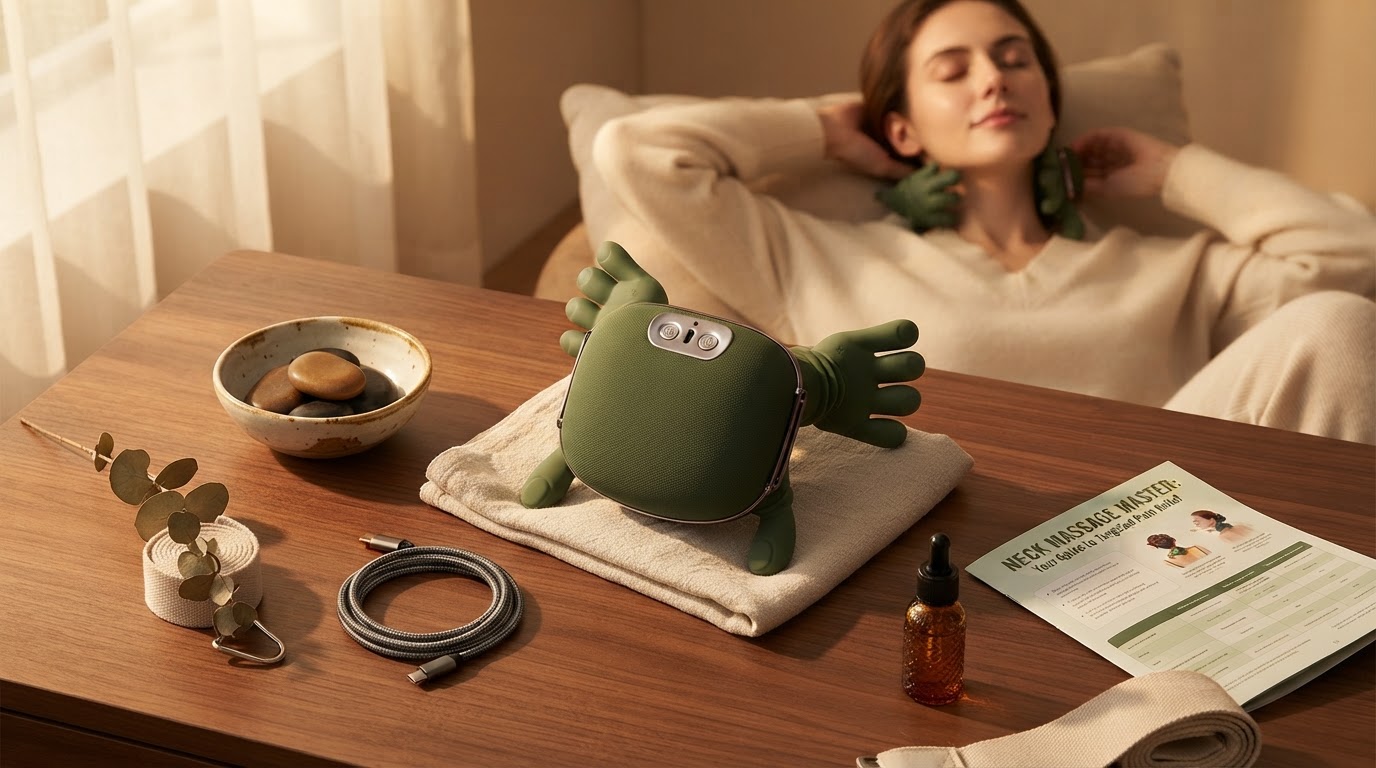
Selecting a Neck Massage Master for Targeted Pain Relief
September 15, 2026. This analysis provides a structured framework for choosing mechanical recovery tools to address cervical discomfort. It is designed for individuals seeking to transition from manual stretching to automated, therapeutic intervention.
To navigate the diverse market of wellness technology, think of it as a matrix of intensity and accessibility. Selecting the right device is not merely about brand preference, but about matching the biomechanical needs of the user to the specific motor capabilities of the massager. Two axes matter here: the depth of tissue penetration and the degree of user autonomy required during the session. By evaluating tools along these dimensions, users can move beyond trial-and-error and toward a predictable recovery protocol. Understanding how to relieve neck tension at home begins with identifying whether the pain is superficial muscular fatigue or deep-seated myofascial knots that require sustained, rhythmic pressure.
The Landscape of Cervical Tension and Recovery
Chronic neck pain often stems from prolonged static postures, such as those associated with office work or frequent mobile device usage. When muscles like the levator scapulae and trapezius remain in a state of semi-contraction, blood flow is restricted, leading to the accumulation of metabolic waste. According to Forbes Vetted, targeting these stubborn knots and aches requires a device capable of mimicking the precise movements of a human therapist, specifically through shiatsu-style rotation or percussive tapping. While basic stretching provides temporary relief, mechanical intervention offers the sustained force necessary to reach deeper layers of tissue that manual efforts often miss.
In the current market, the variety of form factors can be overwhelming. Some users benefit from a portable neck massager for travel that prioritizes a lightweight build, while others require a stationary, high-torque unit for domestic use. The core issue remains the same: the need for consistent, targeted pressure to break the cycle of muscle guarding. The physiological benefit of heat therapy, often integrated into modern massagers, further enhances this process by dilating blood vessels and increasing the elasticity of collagen fibers. Without this combination of mechanical pressure and thermal regulation, recovery is often incomplete, leading to the recurrence of tension within hours of a manual session.
The Neck Massage Master Approach to Relief
Neck Massage Master addresses these physiological requirements through a focus on motor precision and ergonomic alignment. The design philosophy centers on the interaction between the cervical spine's natural curvature and the rotational arc of the massage nodes. Unlike generic massagers that may apply uneven pressure, a Neck Massage Master device is engineered to maintain consistent contact with the paraspinal muscles. This is critical for users who experience referred pain, such as tension headaches originating from the base of the skull. By utilizing 3D or 6D roller technology, these devices simulate the circular motion of a plum-blossom roller, a technique noted by Breo-Official as being particularly effective for deep neck pain relief.
Once you see it this way, the distinction between a simple vibratory tool and a professional-grade massager becomes clear. The latter focuses on torque—the ability to maintain rotation even when significant pressure is applied by the user. This allows for a deeper reach into the suboccipital muscles, which are frequently the source of severe stiffness. Furthermore, the integration of cordless technology ensures that the user can maintain a neutral posture during the massage, rather than being tethered to a wall outlet in a way that creates new points of tension. This autonomy is essential for long-term compliance with a recovery routine, as it allows the user to integrate therapy into their existing schedule without disruption.
A Framework for Device Selection
Choosing a massager requires a systematic evaluation of specific features against personal pain profiles. The decision rule is simple: if the pain is localized and sharp, prioritize precision nodes; if the pain is diffuse and accompanied by stiffness, prioritize heat and broad-surface rollers. For those who frequently find themselves needing relief during the workday, a portable neck massager for travel provides a necessary bridge between morning and evening recovery sessions. Conversely, those focused on how to relieve neck tension at home should look for units with adjustable arm straps that allow the user to control the intensity of the massage nodes by pulling down on the handles.
Use this checklist to evaluate your prospective device:
- Node Configuration: Ensure the device uses multi-directional nodes that can change rotation automatically to prevent muscle bruising.
- Thermal Range: Verify that the heating element reaches a therapeutic temperature (typically between 104°F and 113°F) without becoming uncomfortable.
- Torque Consistency: Look for high-quality motors that do not stall when you lean back into the device for deeper pressure.
- Ergonomic Versatility: Select a model that can be adjusted to fit both the neck and the lower back to maximize the utility of the investment.
- Battery Density: For cordless models, ensure the battery life supports at least four 15-minute sessions to avoid frequent recharging interruptions.
Sources
- Best Neck Massagers 2026 - Forbes Vetted
- The 9 Best Neck Massagers of 2026, Tested and Researched - HEALTH
- What's the Best Massager for Neck Pain - Breo-Official